Growth goal
Find this week's best growth opportunities and prepare the next actions.
AI-powered growth for lean teams
Tell Lumiel what you want to grow. It drafts the plan, does the work across your channels and tools, and shows you what moved. You decide how much it does without asking.
Your workspace agent
Describe the result you want. Lumiel breaks it into a plan, runs it once you approve, and tracks whether it actually moved the number.
Needs your review
Review the ideal customer profile, pilot requirements, and existing customer research before preparing outreach.
Save the shortlist and message drafts in the workspace. Sending messages requires its own approval; approving the plan does not send them.
Use recorded signup evidence to verify customer fit. Completed outreach tasks alone do not confirm that the goal has been achieved.
Research and drafts stay in your workspace. External messages, publishing, and spending require their own approval. Review the recorded results before confirming the goal outcome.
Recruit 10 qualified pilot customers in 30 days.
30 days
Baseline 0
At least 10 customersSource: confirmed pilot signups
Count customers who match the agreed profile and have confirmed their participation. Verify the evidence at the end of the target period.
Each stage contains its steps. Changes stay within that stage.
Use the product brief and customer research as context. Keep outreach in draft until it is approved. No advertising spend is included in this plan.
Built-in tools
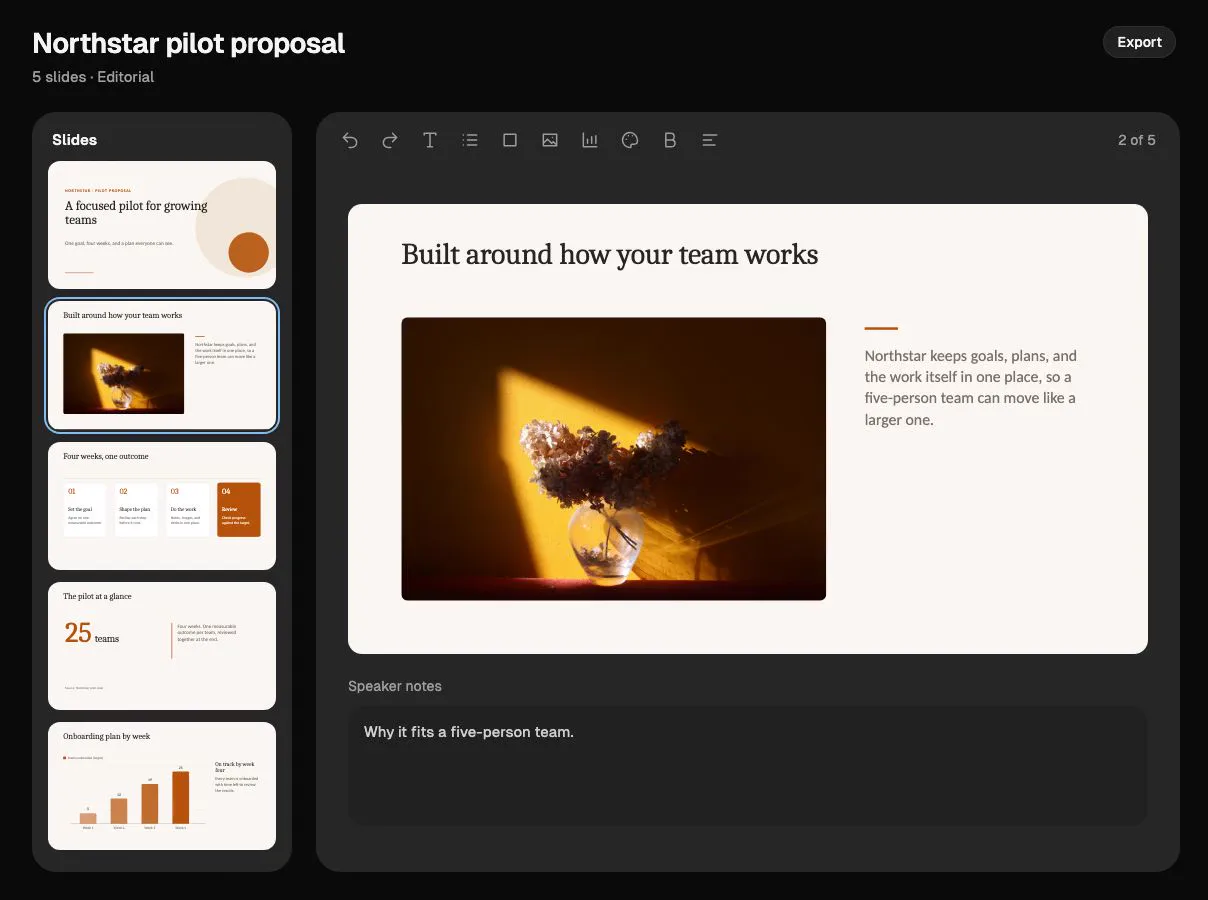
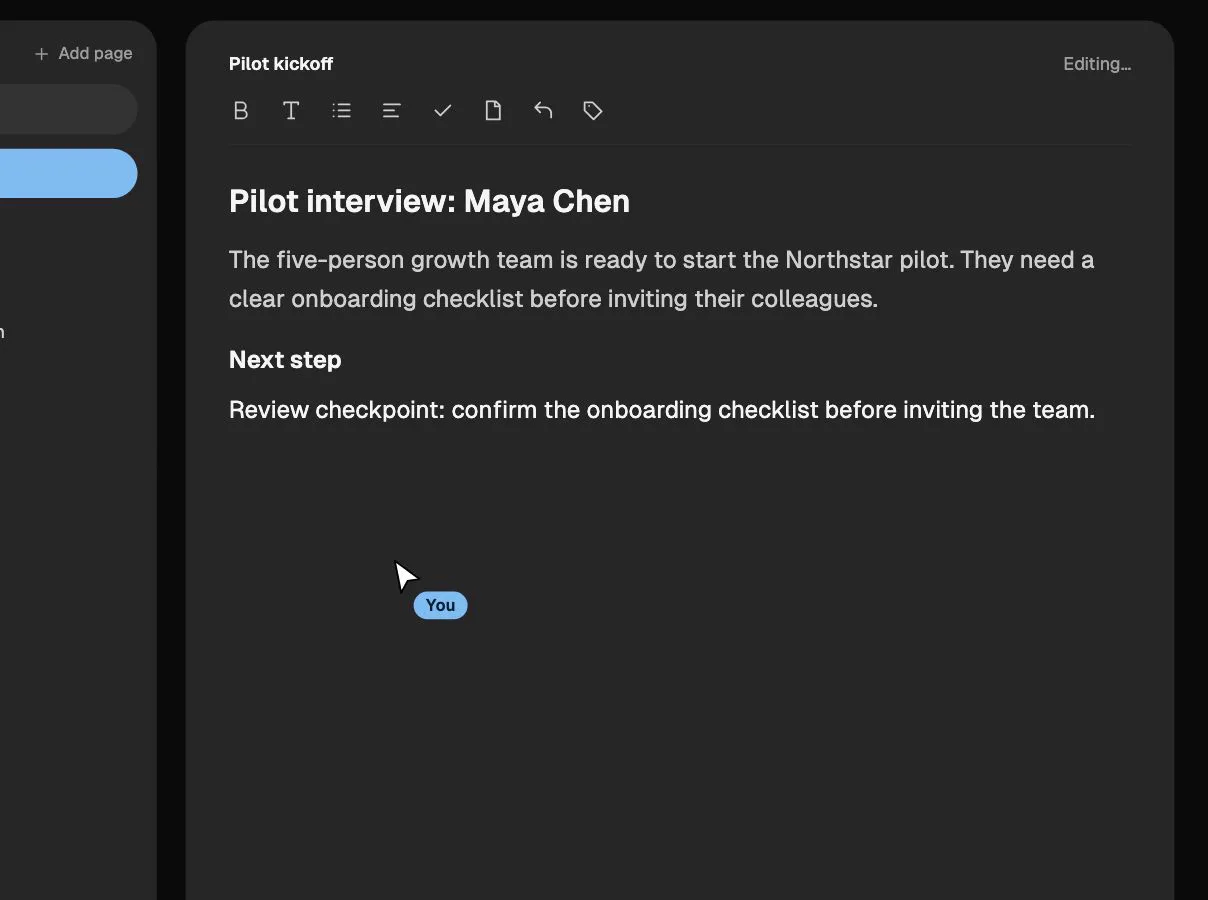
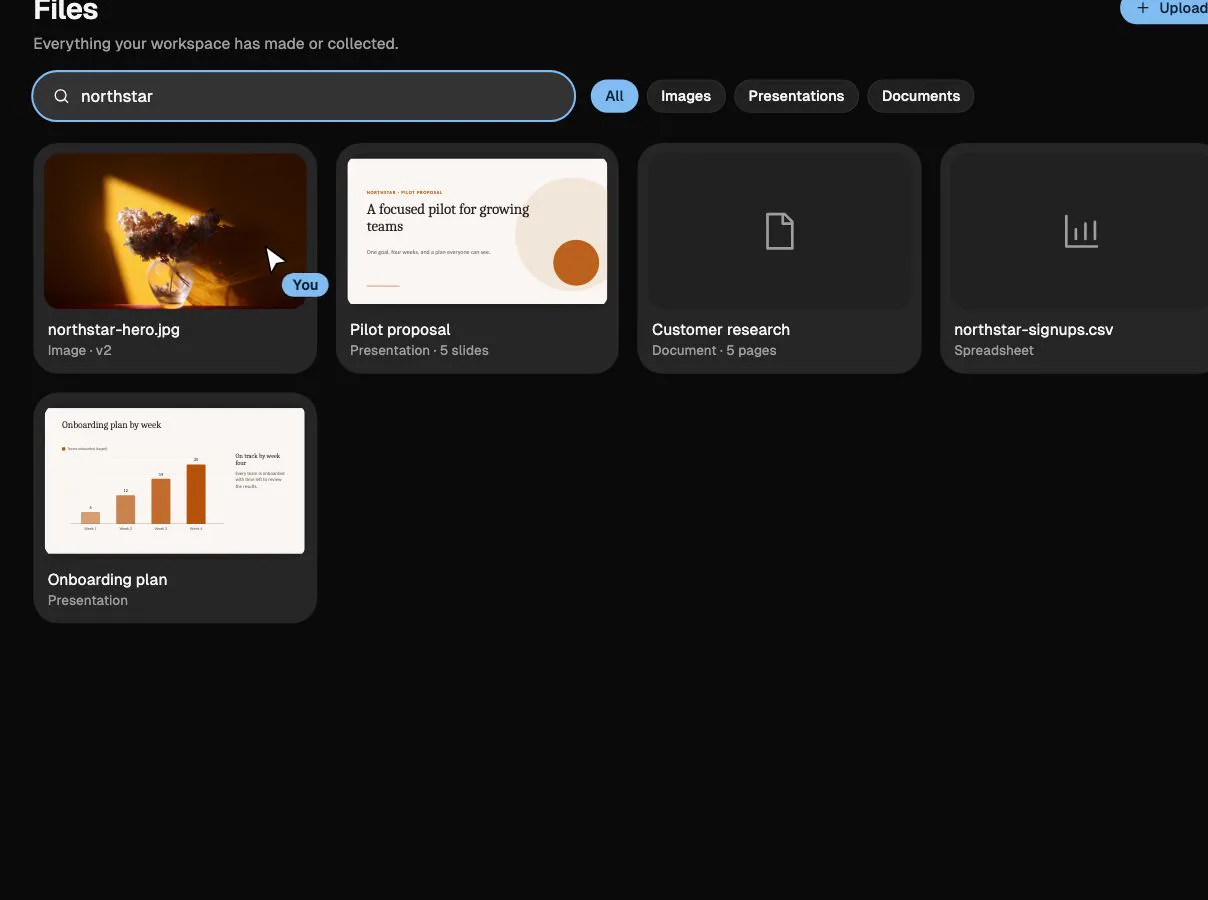
Image Studio, presentations, notebooks, and files come with every workspace. Use them yourself, or let the agent use them in a plan.
Bring a visual into the workspace and make it yours.
Illustrative demos with fictional data.
Research
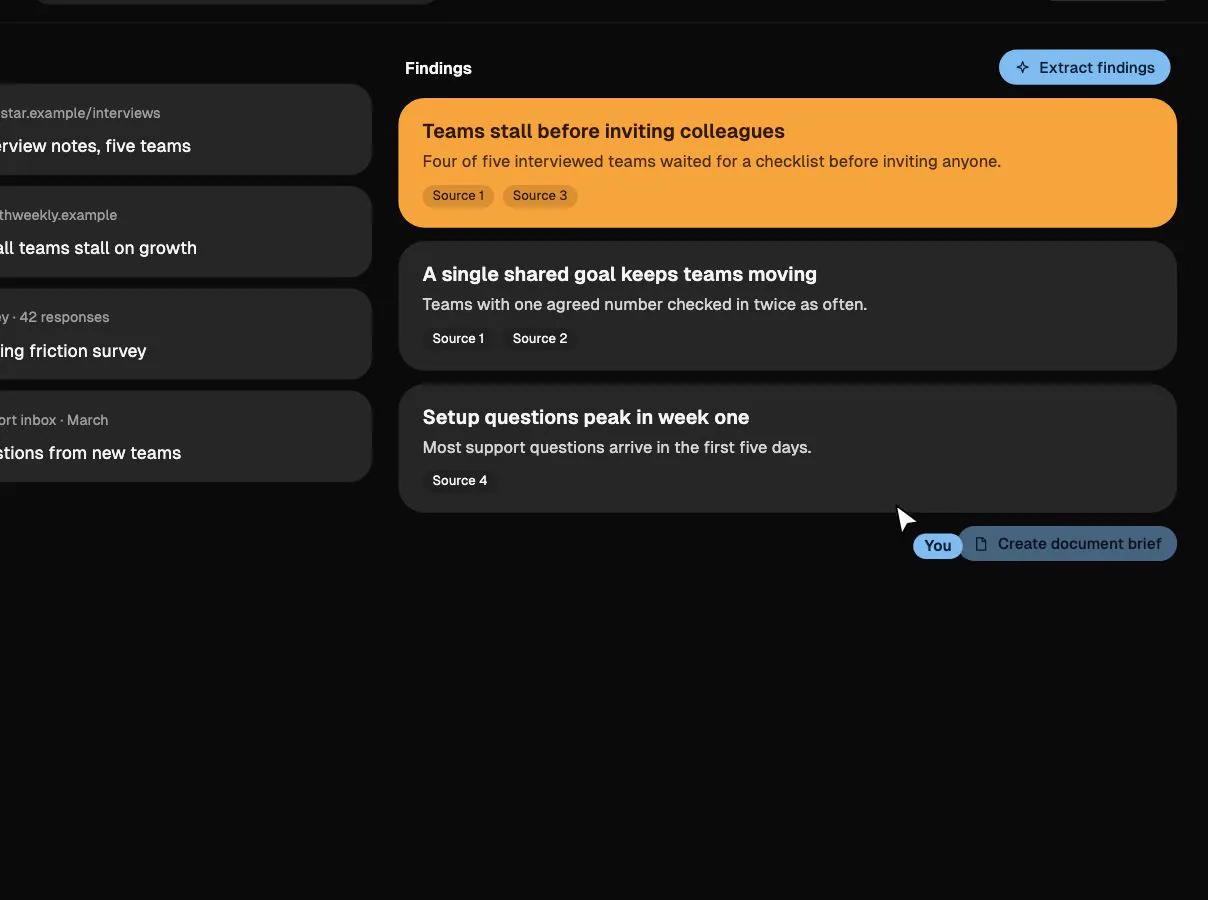
Collect sources, pull out findings, and turn them into an editable brief, article, or deck that feeds straight into your next task.
Apps
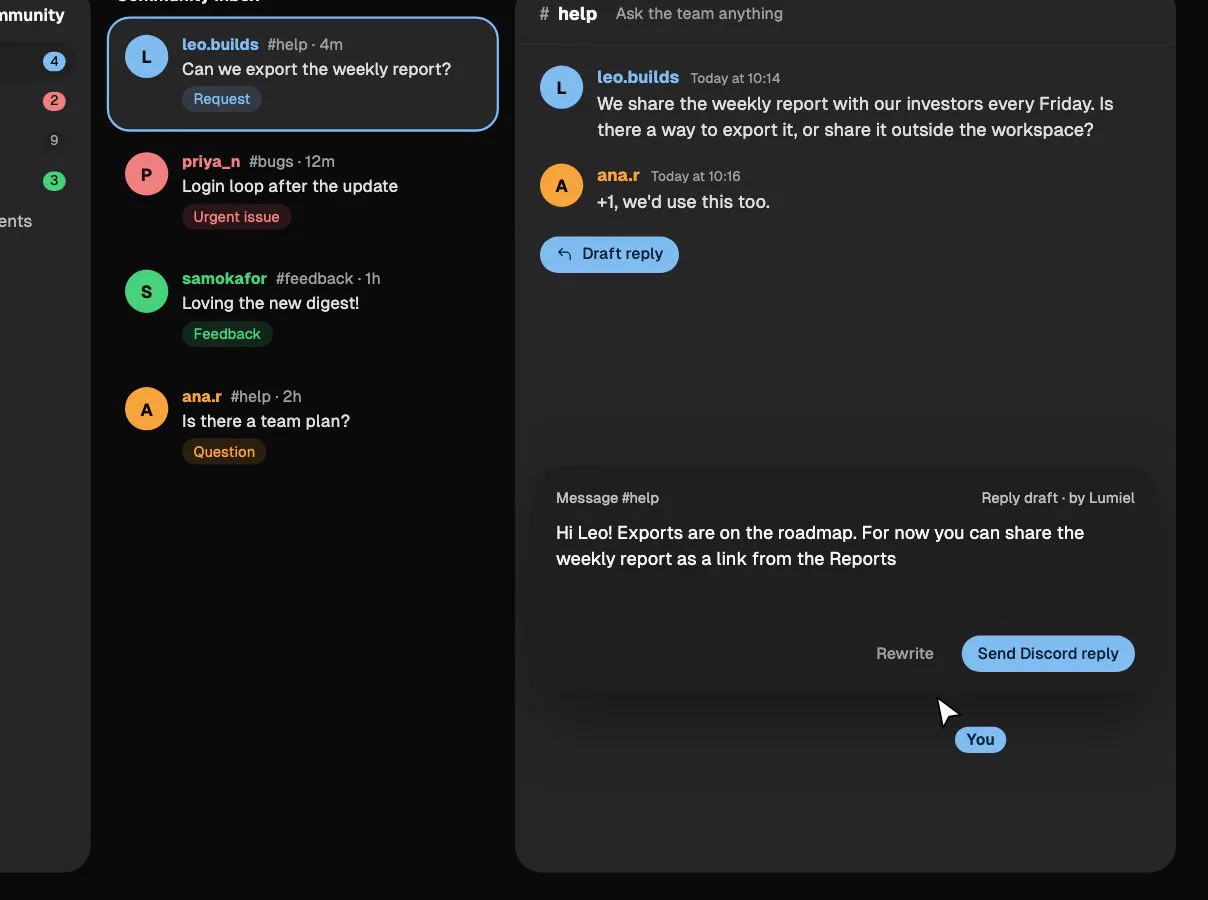
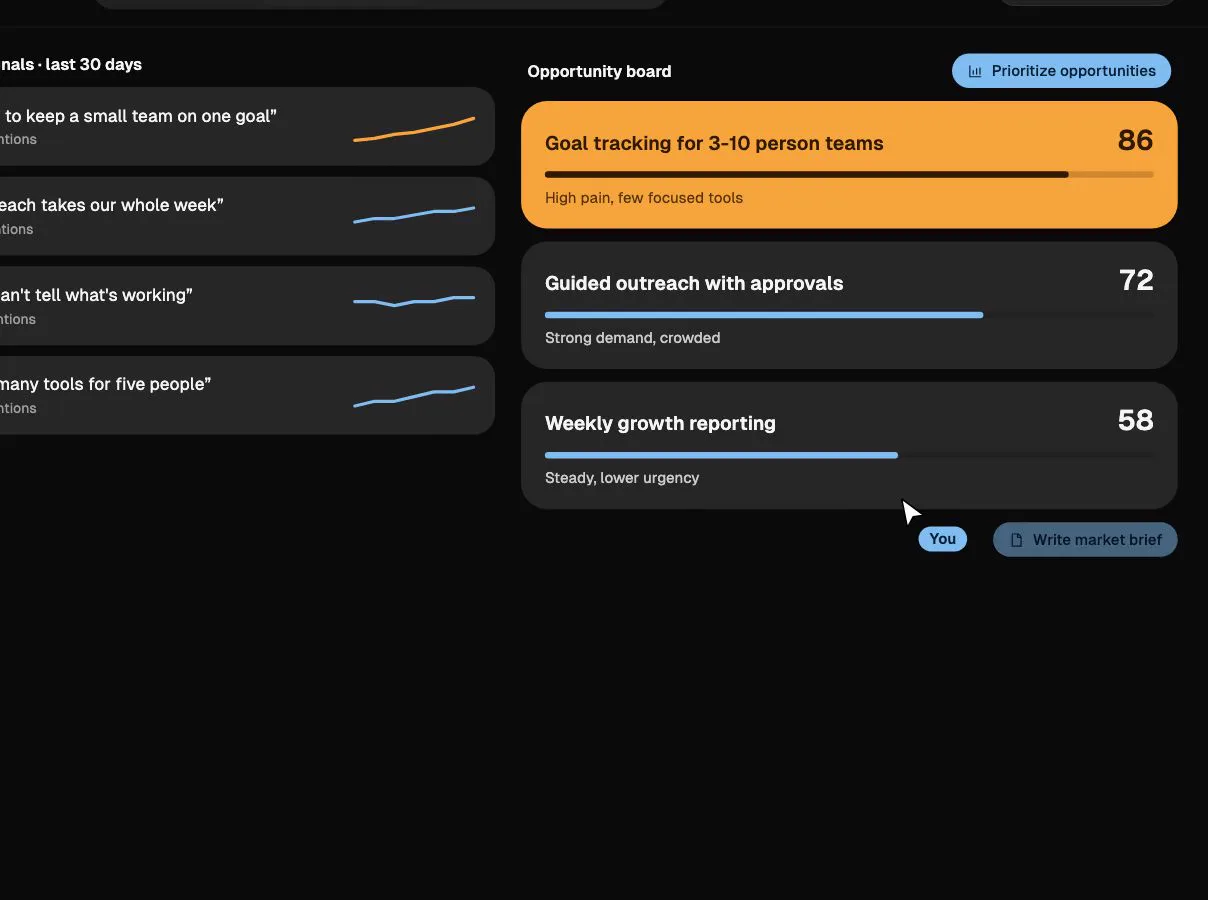
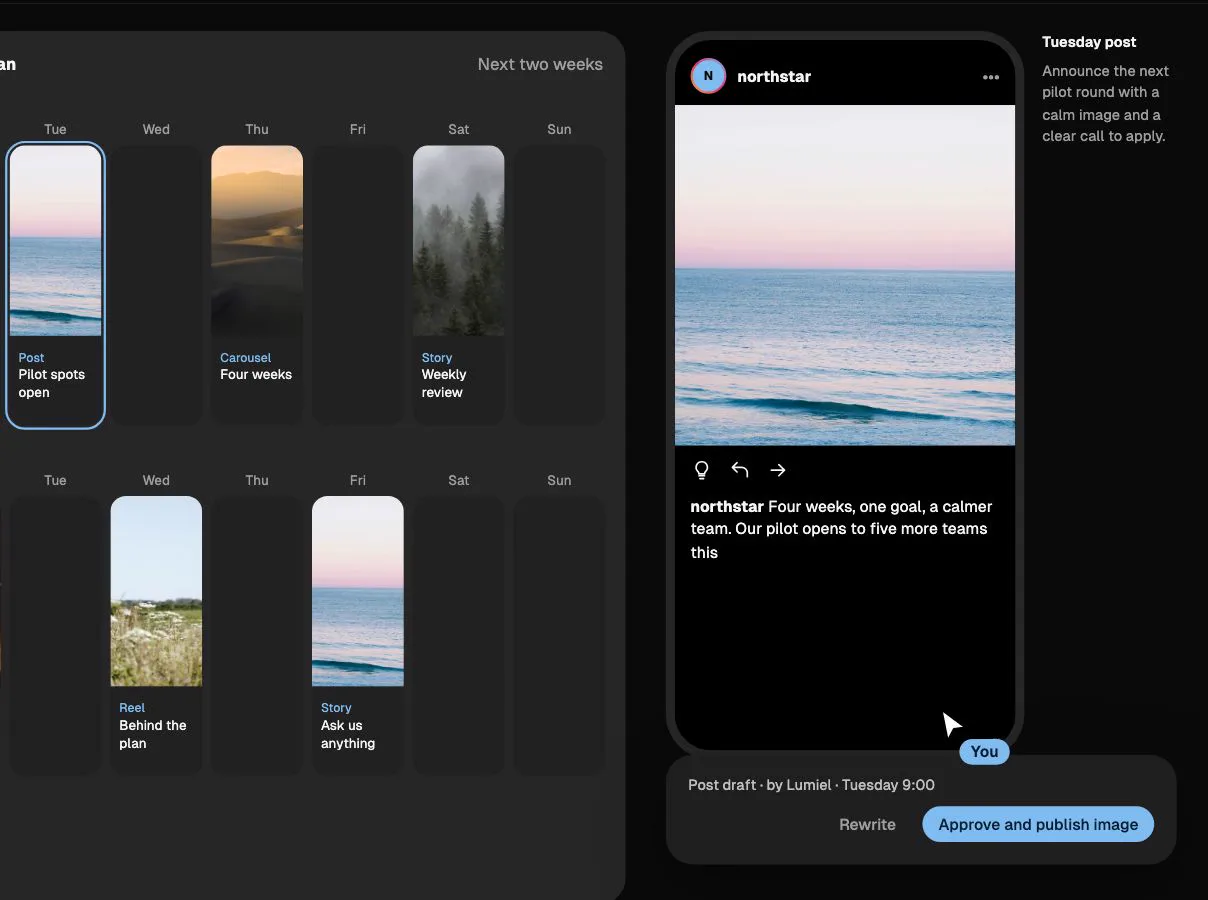
Each app is a ready-made workspace for one job, with views for your team and tools for the agent.
Illustrative demos with fictional data.
Custom apps
Describe what you need, or ask Lumiel to adapt an existing app. You review the result before it’s installed.
Integrations
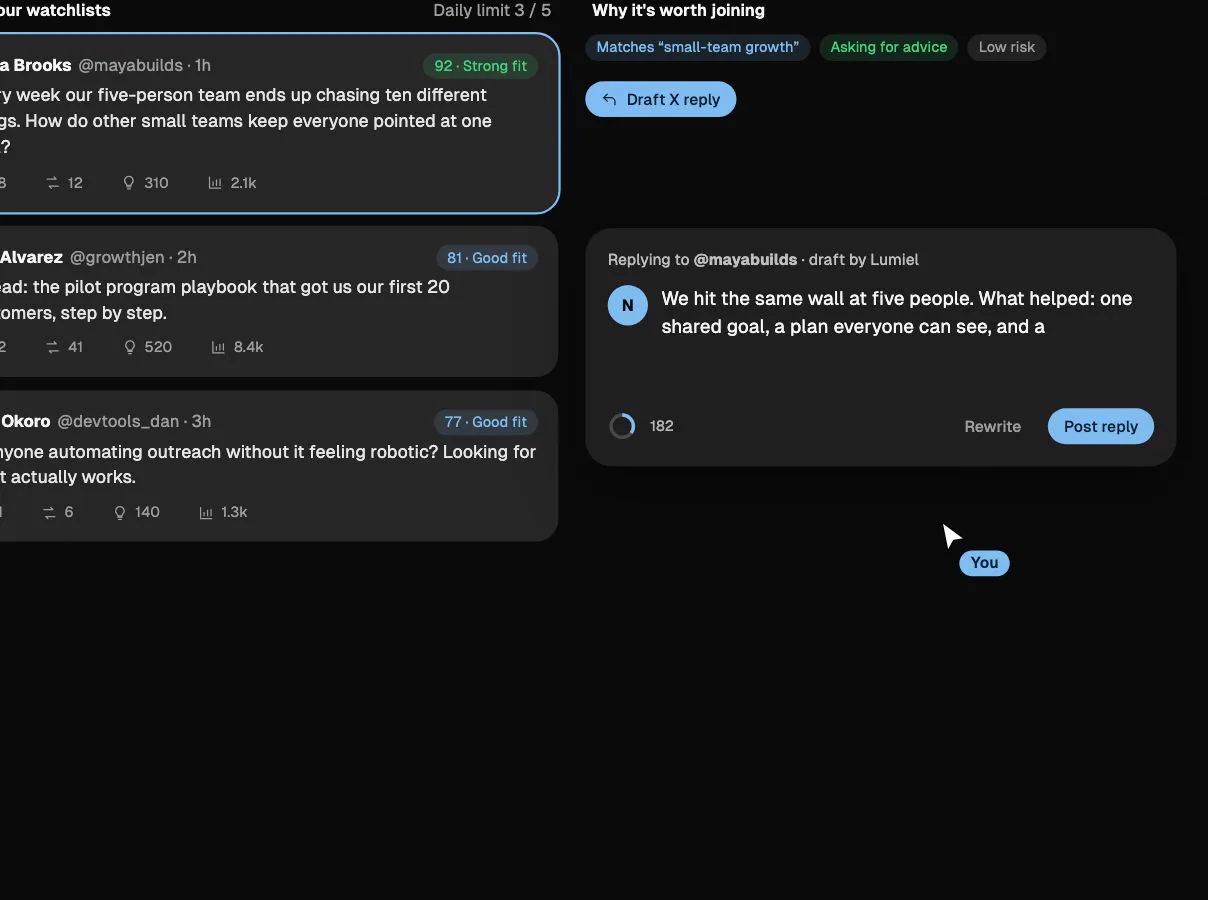
Connect your accounts once. The agent can then post, reply, and run campaigns in them, either directly or through an app.
Channels, threads, conversations, replies, and community events
Posts, Communities, replies, publishing, and engagement
Posts, Reels, comments, publishing, and audience engagement
Selected labels, threads, drafts, replies, and mailbox actions
Search campaigns, responsive ads, targeting, and performance
Campaigns, audiences, creative, placements, and insights
How it works
Here’s one goal from start to finish. This is an illustrative example, not a customer result.
“Recruit 10 qualified pilot customers in 30 days.” Success means 10 confirmed signups, not 10 emails sent.
Agree on the offer, build a prospect shortlist, then draft outreach. You change the target profile and approve.
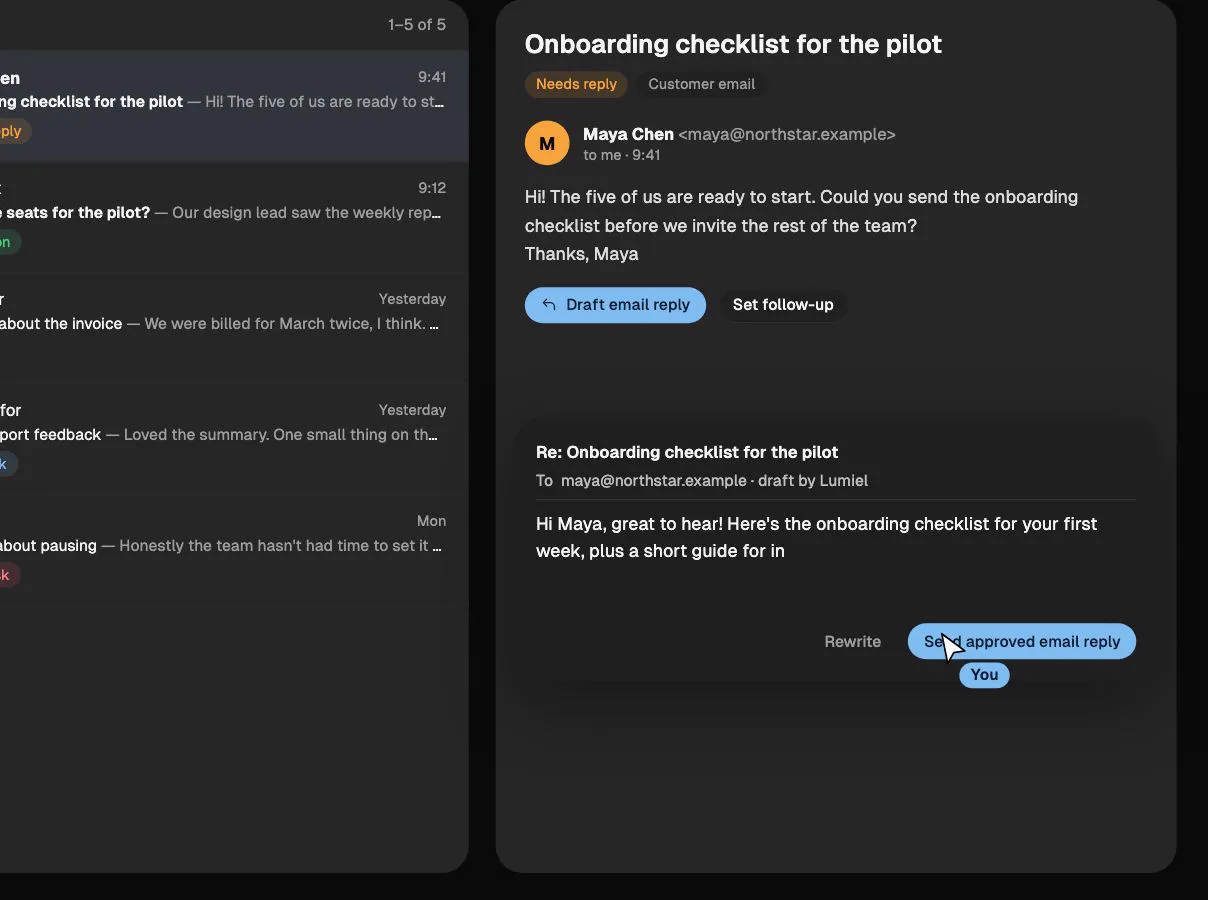
The agent researches prospects and drafts personal emails in Gmail. Each message waits for your sign-off before it sends.
Signups are tracked against the target of 10, so you know whether to keep going or change the plan.
Works ahead of you
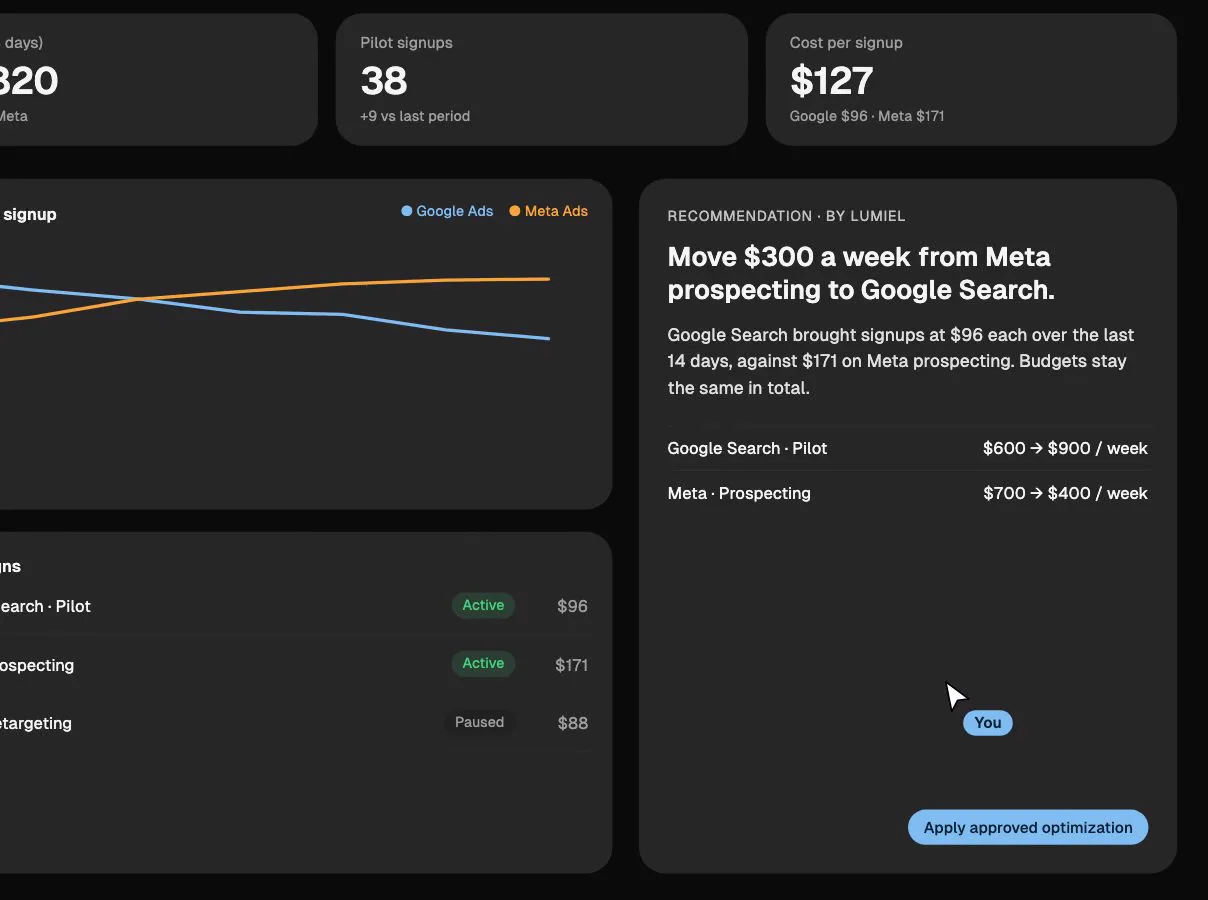
Lumiel looks for opportunities without waiting to be asked. Ask first on every change, or let trusted actions like ad budget tweaks run on their own within limits you set.
A proposed plan is ready. Open it to review approval and execution status.
Summer acquisition on Meta Ads is beating its cost-per-signup target. You accepted this opportunity, and Lumiel prepared a plan to raise its daily budget from $200 to $224 (+12%).
No budget change has been sent. Review the plan before work starts.
Review planOnly exact Google or Meta campaign budget operations can use bounded autonomy.
Confirming authorizes only this exact scope and limit set. Once the plan is approved, budget changes inside it can run automatically until it expires.
Trust and control
You decide what Lumiel can touch and what needs your sign-off. Every action is checked against those rules when it runs, and recorded afterwards.
Choose which accounts and data Lumiel can use. Permissions and limits are checked every time an action runs.
Decide which actions need your sign-off and which can run on their own. Custom code runs in an isolated sandbox.
Every run, approval, and result is recorded in a history you can look back through.
Pricing
Every plan includes the full platform. Choose how much monthly usage you need.
Basic
per month
Get started with all essentials
Pro
per month
For growing teams and businesses
Business
per month
Advanced features for larger teams
Enterprise
Built around your requirements
Custom pricing and limits for enterprises
Every plan includes the core platform
Credits cover AI usage and metered provider operations. Google and Meta advertising spend is billed separately by those providers.
FAQ
Approvals, apps, integrations, and credits.
Put Lumiel to work
Set the goal. Review the plan. Put the work in motion and follow the results.